
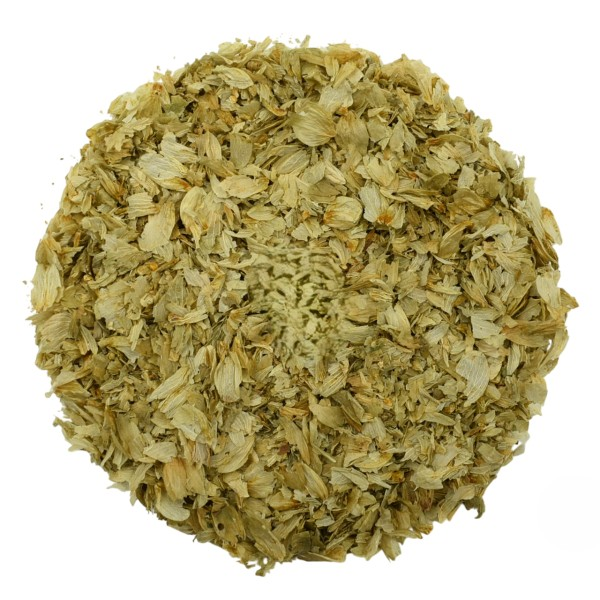
Latin Name: Humulus Lupulus L.
Country Origin: Germany
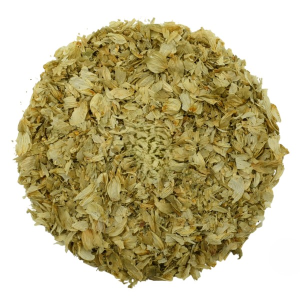
Humulus Lupulus, commonly known as hops, is a climbing plant native to Europe, western Asia, and North America. It is cultivated primarily for its use as a flavoring and preservative agent in beer production.
Hops are also used in some herbal teas and aromatherapy products. It is a perennial, herbaceous climbing plant which sends up new shoots in early spring and dies back to a cold-hardy rhizome in autumn. It has a floral, spicy, and citrusy flavor.
Benefits
- Humulus lupulus L. are well-known for their calming and sedative properties, often used in combination with valerian root to treat insomnia and anxiety.
- Hops have natural antibacterial and antifungal properties, making them useful for beer brewing, to preserve the beverage.
- The bitter compounds in hops can stimulate digestive juices, improving appetite and aiding digestion.
Hot Brewing Infused Hops Tea
- Place 1-2 teaspoons of dried leaves in a teapot or cup.
- Pour 1 cup of boiling water over the leaves.
- Steep for 10-15 minutes.
- Strain and drink.
- You can add honey, lemon, or other herbs for flavor.
Culinary Uses
- While less common, dried hops leaves can be used as a flavoring agent in soups or stews.
Side effects
- Common hops (Humulus lupulus L.) are generally considered safe for consumption when used in moderation and in appropriate forms.
- However, Hops have strong calming properties, which can cause drowsiness or excessive sleepiness.
- Some individuals may experience allergic reactions to hops, such as skin rashes or itching.
- In some cases, hops may cause mild digestive discomfort, such as nausea, upset stomach or diarrhea.
- Hops are NOT recommended for pregnant or breastfeeding women.
Disclaimer: This information is for educational purposes only and it is not intended to diagnose, cure or prevent any disease.

Reviews
There are no reviews yet.