
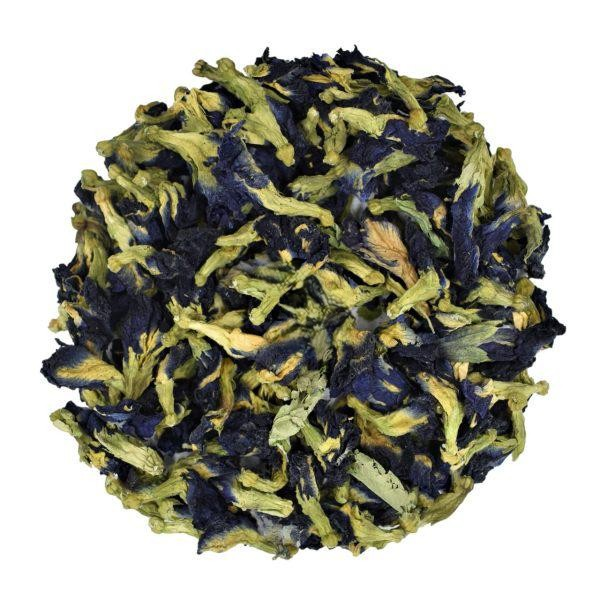
Latin Name: Clitoria Ternatea
Country of Origin: China
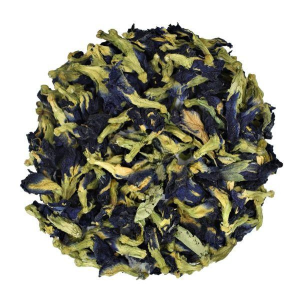
Originates from Southeast Asia; traditionally used in Ayurvedic and Thai cultures. Studies have shown Butterfly Pea flowers can offer various health benefits, including immune boosting properties, improved cognitive ability and weight loss.
Like all herbal teas, butterfly pea flower is caffeine-free. Also, it is high in antioxidants, vitamin A, C and E. Furthermore, the flowers have so many benefits to offer, such as keeping skin glow and healthy as well as strengthening hair health.
Traditionally, the Butterfly Pea flowers have been used to treat general pain, reduce inflammation, help with common eye issues like conjunctivitis and induce brain health.
The petals have practically no scent or flavor, making it the perfect food coloring agent for any dish or drink without changing its flavor.
As a tea, offers a subtle floral-grassy aroma and brilliant blue color, it has a mild woody, earthy taste, similar to the flavor of unsweetened green tea.
How it is used
- Brewed as a calming, antioxidant-rich blue tea. Teas, lattes, cocktails, natural food coloring.
- In South-east Asia, butterfly pea flowers have long been used as a natural food coloring for food and drinks in Thai, Malay and Peranakan cuisines.
Hot Brewing Infusion Butterfly Pea Flowers
- Use 1–2 grams of dried flowers per cup 250 ml
- Infuse 5–7 minutes in hot boiling water
Cold Brewing Infusion Butterfly Pea Flowers
- Pour about 1/4 to 1/3 of the tea concentrate into a glass with ice
- Add 2 teaspoons of lime or lemon juice
- The blue color will turn to purple like magic.
Side effects
- There haven’t been any side effects associated with Butterfly Pea Flowers reported up till now.
Disclaimer: This information is for educational purposes only and it is not intended to diagnose, cure or prevent any disease.
Reviews
There are no reviews yet.