
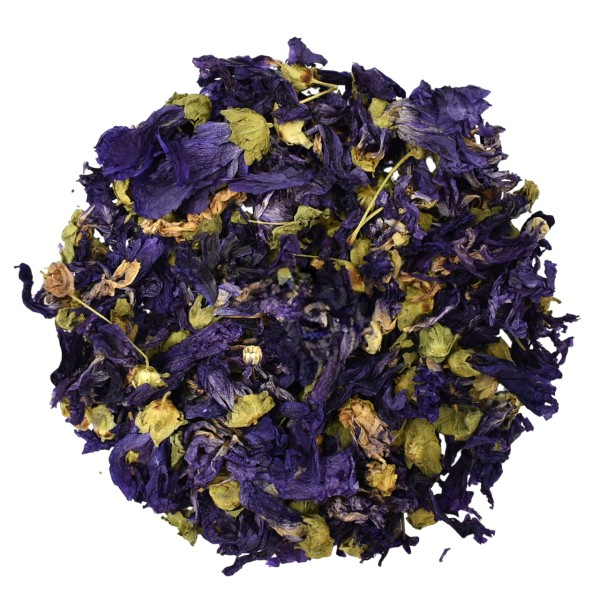
Latin Name : Malva Sylvestris L.
Origin Country: Kosovo
Mallow is best known for its capacity to reduce inflammation in the body and help treat common afflictions such as gastritis, sore throat, rashes, ulcerations and toothaches. It makes an outstanding antibacterial, astringent and anti-inflammatory and is thus useful for the treatment of a wide range of medical conditions.
Benefits
- Mallow is recognized as an efficient herbal remedy for colds, asthma and general respiratory problems. The leaves and flowers boast strong anti-inflammatory properties and thus efficiently reduce inflammation at the level of the throat.
- Moreover, mallow seeds contain mucilaginous substances which cover the inflamed tissue, forming a protective layer which allows it (the tissue) to recover. Mallow appears to be highly efficient in treating inflammations and irritations of the mouth as well, and provides relief in cases of dry cough, making a good natural antitussive.
- Soothes gastritis pain, reduces inflammation at the level of the stomach and intestines. Apparently, the same mucilaginous substances that promote sore throat healing allow the stomach mucosa and intestinal walls to heal through the same mechanism.
- If you are suffering from gastritis or stomach acid, it might help to drink one or two cups of mallow tea with roots a day. Mallow will not only calm irritation, but it will also reduce inflammation throughout the gastrointestinal tract. Studies suggest that the roots are particularly efficient at reducing inflammation.
- Treats rashes, ulcerations , insect bites, burns and eczema. Traditional medical practices recommend applying a poultice made from crushed flowers and seeds locally on affected areas in order to reduce itching, redness, swelling and soothe the skin.
- Reduces gum inflammation. A mallow gargle used at regular intervals is said to reduce painful gum inflammation.
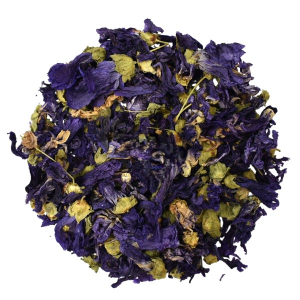
Brewing Infused Blue Mallow Flowers Tea
- To make an infusion, place one tablespoon of dried flowers into a ceramic teapot.
- Cover with hot boiling water.
- Place on the lid or cover your cup with a saucer.
- Let steep for 10-15 minutes or overnight.
Side effects
- The plant is not toxic and there are no reports of contraindications, side effects or interactions with other medications.
- This applies to both the flowers and the leaves. Large doses, however, can be used as a laxative and in turn cause diarrhea.
Disclaimer: This information is for educational purposes only and it is not intended to diagnose, cure or prevent any disease.
Reviews
There are no reviews yet.