
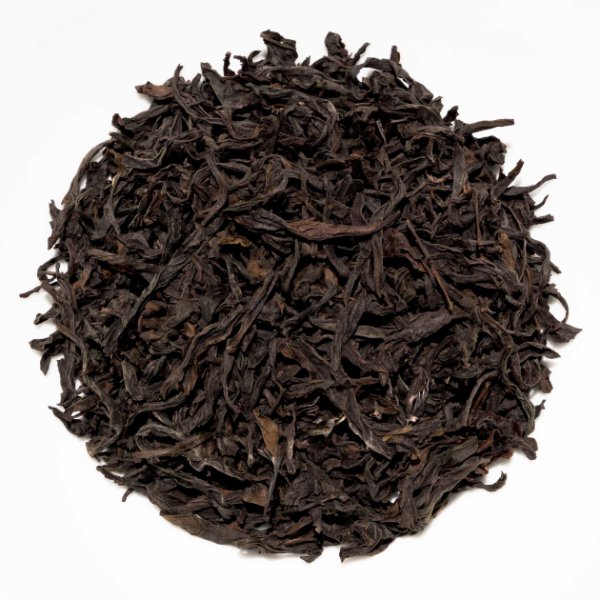
Da Hong Pao – Oolong Tea
Origin: China
Infusion Temperature: 90-95°C Celsius
Infusion Time: 2-3 minutes
Serving Size: 2-3 grams/200 ml</h6
Among the most legendary and sought after teas in the world, Da Hong Pao, also called “Big Red Robe” holds a special place in the heritage of Chinese tea. Grown on the steep cliffs and rocky soils of the Wuyi Mountains in Fujian province, this iconic rock oolong Yancha is famed for its powerful aroma, mineral depth, and long, warming finish.
Revered for centuries and once reserved for emperors, Da Hong Pao remains one of China’s most prestigious teas. Though the six original mother bushes now designated as national treasures produce only a few hundred grams per year and are under strict protection, today’s Da Hong Pao comes from their direct descendants, propagated via cutting in the 1980s and cultivated in the same revered terroir.
Da Hong Pao’s fame is deeply entwined with legend. According to Ming dynasty lore, in 1385 a young scholar named Ju Zi Ding, on his way to the imperial examination, fell gravely ill while traveling through the Wuyi Mountains. A local monk offered him a mysterious tea infusion, from which he miraculously recovered. The scholar went on to excel in the exam and was granted a red imperial robe as a symbol of honor.
In gratitude, he returned to the monk, asked to see the origin of the tea, and draped his scarlet robe around the tea bushes as a mark of respect. Later, when the emperor’s mother became seriously ill, Ju Zi Ding presented her with the same tea and she was healed too. From that time forward, imperial messengers were sent annually to wrap the bushes in red cloth. Thus the name Da Hong Pao Big Red Robe was born.
The Wuyi Mountains offer a singular terroir: rich mineral soil, cliffside mists, and dense forests. These conditions give rise to Yan Yun, the “rock rhyme” or mineral resonance that is the signature of Wuyi teas. The tea’s complex flavor is further enhanced by its careful craftsmanship: a 60% oxidation level, followed by a charcoal roasting process that deepens its body and adds nuance over time. Da Hong Pao can be aged, and like fine wine, it gains further richness and harmony with time.
This summer harvest offers a full-bodied cup with remarkable complexity. Expect a deep amber infusion color with notes of toasted cacao and burnt caramel, fresh tobacco and aged wood, delicate floral hints of violet, a persistent mineral backbone that reflects its rocky origin. Its warming nature and layered profile make it an ideal tea for winter and reflective moments.
Brewing Recommendations:
- Warm your teapot or gaiwan by rinsing it with hot water, then discard the water.
- Rinse the leaves adding the tea leaves to your preheated vessel.
- Pour a small amount of hot water over the leaves, just enough to cover them.
- Immediately pour off this rinse water. This step washes the leaves and helps them start to open up.
Gong Fu Cha Traditional Infusion Chinese Method:
- Water temperature: 90-95°C
- Tea quantity: 2-4 grams for 100-200 ml of water
- Steeping time: 20-40 seconds
- For the second and following infusions, add hot water and increase the steeping time by about 10-30 seconds each time.
- Suitable for up 5 to 8 infusions, maintaining consistent temperature and adjusting time with each steeping.
Western Style Infusion Method:
- Water temperature: 90-95°C
- Tea quantity: 7 grams for 500 ml of water
- Steeping time: 2-3 minutes
- Repeat: Up to 3 infusions, keeping the same temperature and timing
For both methods, we recommend low-mineral or soft water to allow the full complexity and clarity of the tea to shine.
Da Hong Pao is more than a tea it is a legacy in a cup. With each infusion, you sip on centuries of craftsmanship, cultural reverence, and natural harmony.
Reviews
There are no reviews yet.